The story of navigation on the Arkansas River begins long before the modern waterway existed. In 1820, the COMET became the first steamboat to navigate the Arkansas River, reaching Arkansas Post about 40 miles above the confluence with the Mississippi on March 31. Its arrival was celebrated as a remarkable achievement, even as observers recognized how close the river had come to stopping the vessel altogether. In those early years, the uncontrolled river swung wildly between nearly dry conditions and dangerous floods, making reliable navigation impossible. Still, the COMET’s journey captured the imagination of people who understood that the economic future of the rich Arkansas Valley depended on a dependable, year-round waterway reaching deep into what is now Oklahoma.
Two years later, on March 22, 1822, the steam packet Eagle became the first steamboat to reach Little Rock. Arkansas’ Secretary of State history timeline notes this as the first steam vessel to travel that far upriver, an early milestone in Arkansas River transportation and commerce. Together, the COMET and the Eagle demonstrated both the promise and the limitations of the natural river, reinforcing the region’s long held dream of a navigable channel that could support sustained economic growth.
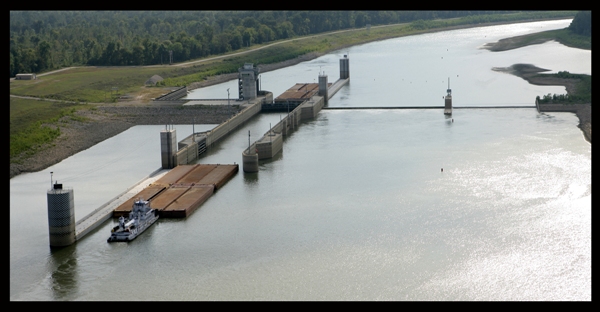
A century and a half later, that dream was realized. In 1970, after more than 25 years of construction by the U.S. Army Corps of Engineers, a 445-mile-long waterway with 17 locks and dams opened to navigation. In July 2004, an eighteenth lock and dam was added at NM 0.5 on the White River Entrance Channel. Because of the scale and complexity of the project, the waterway would never have been built without the persistent efforts of countless Arkansans and Oklahomans in both public and private life.
In 1971, Congress officially named the system the McClellan Kerr Arkansas River Navigation System (MKARNS) in honor of two of its most influential champions, U.S. Senators John L. McClellan of Arkansas and Robert S. Kerr of Oklahoma.